Cake: Elevating Digital Artistry with Sketch-Style Procreate Stamp Brushes
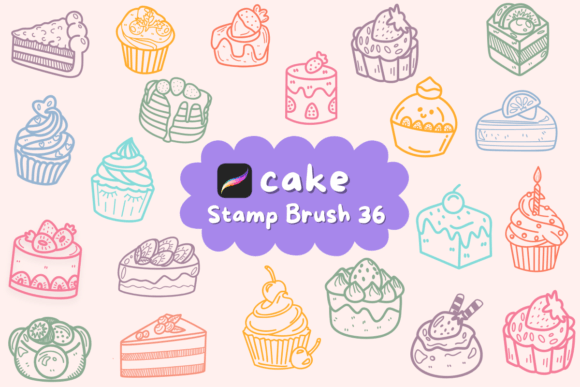
In the rapidly evolving landscape of digital illustration, the quest for authenticity remains paramount. Artists and designers constantly seek tools that bridge the gap between pixel-perfect precision and the organic imperfection of traditional media. Enter Cake, a specialized collection of Procreate stamp brushes designed to inject a distinct sketch style into creative workflows. Unlike standard vector-based assets or rigid clip art, these brushes capture the essence of hand-drawn textures, offering a unique aesthetic that resonates deeply with audiences seeking warmth and personality in their visual communications.
The utility of Cake extends far beyond simple decoration. It represents a shift in how digital creators approach texture, layering, and composition. By utilizing these specific stamp brushes, professionals can achieve a look that feels meticulously crafted by hand, even when working within a strictly digital environment. This capability is particularly valuable for industries where the "human touch" commands a premium, such as wedding planning, boutique branding, and artisanal product design.
The Anatomy of a Sketch Style Workflow
Understanding how Cake functions within the Procreate ecosystem is essential for maximizing its potential. At its core, a stamp brush operates differently than a continuous stroke brush. While a stroke brush records the movement of the stylus to create lines, a stamp brush places a pre-defined image or texture at the point of contact. The genius of the Cake set lies in the quality and variety of these stamps. They are not merely static images; they are engineered with alpha channels, opacity variations, and rotation capabilities that mimic the erratic nature of ink on paper or pencil on canvas.
When an artist engages with Cake, they are essentially curating a library of sketched elements. These might include delicate flourishes, rough charcoal smudges, watercolor splatters, or intricate floral motifs rendered in a loose, gestural style. The workflow becomes one of assembly and arrangement rather than pure drawing from scratch. This does not diminish the artistic skill required; rather, it shifts the focus to composition, spacing, and the harmonious blending of disparate elements into a cohesive whole.
For those accustomed to traditional mediums, the transition to using Cake in Procreate offers a familiar tactile experience. The ability to adjust pressure sensitivity allows for dynamic variation in the size and opacity of each stamp. A light tap might yield a faint, ghostly outline, while a firm press creates a bold, saturated mark. This responsiveness ensures that the final output retains the spontaneity associated with hand-sketching, avoiding the sterile uniformity often found in digital graphics.
Technical Integration and Layer Management
To truly leverage the power of Cake, users must master the technical aspects of layer management within Procreate. Because stamp brushes place individual instances of an image, they interact uniquely with blending modes and clipping masks. For instance, applying a "Multiply" blend mode to a layer filled with Cake stamps can instantly ground the artwork, making the sketches appear as if they were drawn directly onto the background texture. Conversely, using "Overlay" can add highlights and depth without obscuring underlying details.
Furthermore, the non-destructive nature of digital stamping allows for endless experimentation. An artist can place dozens of Cake elements, adjust their positions, rotate them to break up symmetry, and alter their color palettes without committing to a permanent change. This flexibility is crucial for iterative design processes, enabling creators to explore multiple concepts rapidly before settling on a final direction. The efficiency gained here is significant, allowing professionals to meet tight deadlines without sacrificing the bespoke quality of their work.
Transforming Wedding Invitations with Hand-Drawn Elegance
One of the most compelling applications for Cake is in the realm of wedding stationery. In an era dominated by mass-produced templates, couples increasingly desire invitations that reflect their unique personalities and stories. The sketch style inherent in these Procreate brushes provides the perfect vehicle for this customization. Whether the theme is rustic bohemian, vintage romantic, or modern minimalist, Cake offers the versatility to adapt to any aesthetic.
Designers can use Cake to create borders that feel organically grown rather than mechanically printed. Imagine a suite of invitations featuring delicate, sketched wildflowers framing the text, each bloom slightly different in size and orientation, mimicking a real garden. The imperfections in the line weight and the subtle variations in the ink density contribute to a sense of intimacy and care. This level of detail suggests that the invitation was personally crafted for the recipient, elevating the perceived value of the entire wedding package.
Beyond floral motifs, the Cake collection often includes typographic elements and decorative dividers that complement hand-lettered scripts. By combining these stamped elements with custom calligraphy, designers can produce invitation suites that look like high-end artisan prints. The result is a tangible connection between the sender and the guest, fostering a sense of anticipation and excitement for the event. For business owners specializing in wedding services, offering designs created with Cake can be a powerful differentiator in a crowded market.
Empowering DIY Enthusiasts and Crafters
The accessibility of Cake makes it an invaluable resource for the burgeoning community of DIY enthusiasts and crafters. Individuals who may not possess advanced illustration skills can still produce professional-grade graphics for their personal projects. Whether creating custom gift tags, scrapbook layouts, or home decor signage, these brushes democratize the creation of beautiful, sketch-style art.
For hobbyists engaged in paper crafting, Cake serves as a digital precursor to physical production. Users can design complex patterns and illustrations on their iPads, print them out, and then cut, fold, and assemble them into three-dimensional objects. The sketch aesthetic translates beautifully to various materials, from cardstock to fabric. The ability to generate unique patterns quickly allows crafters to experiment with color combinations and layouts without wasting expensive physical supplies.
Moreover, the educational aspect of using Cake cannot be overstated. As users manipulate these brushes, they gain insights into principles of design such as balance, rhythm, and hierarchy. Observing how a scattered arrangement of stamps can create a focal point or how varying the scale of elements adds depth teaches fundamental artistic concepts. This learning curve empowers hobbyists to eventually move beyond templates and develop their own original styles, using the brushes as a foundation rather than a crutch.
Strategic Branding and Logo Design Considerations
In the competitive world of branding, standing out requires a visual identity that communicates authenticity. Many businesses, particularly those in the food, beverage, and lifestyle sectors, are moving away from sleek, corporate logos toward more approachable, human-centric designs. Cake plays a pivotal role in this trend by providing the raw materials for sketch-style logos and brand marks.
A logo created with Cake stamps inherently possesses a narrative quality. It suggests a story of craftsmanship, heritage, or local sourcing. For example, a bakery might utilize a sketched cupcake icon created with these brushes to convey the idea of homemade goodness. Similarly, a coffee shop could employ rough, textured stamps to evoke the earthy, grounded nature of their product. The imperfections in the sketch style signal to consumers that the brand values character over perfection, a sentiment that resonates strongly with modern buyers.
However, there are considerations when using sketch styles for branding. Legibility and scalability are critical factors. While a detailed sketch may look stunning on a large poster, it might lose definition when shrunk down to a social media avatar or embroidered on a small patch. Designers must carefully select which elements from the Cake collection to use, ensuring that the core logo remains recognizable at various sizes. Simplifying the composition and focusing on strong, defining strokes can mitigate these issues while retaining the desired aesthetic.
Adaptability Across Media Channels
Once a brand identity is established using Cake, its application across different media channels becomes seamless. The digital nature of the files means they can be easily adapted for web banners, email signatures, packaging labels, and merchandise. The consistency of the sketch style across all touchpoints reinforces brand recognition. Furthermore, the ability to recolor the stamps allows brands to maintain a cohesive palette while experimenting with seasonal variations or special promotions.
For business owners, investing time in mastering Cake can lead to significant cost savings. Instead of commissioning custom illustrations for every marketing campaign, they can build a versatile asset library using these brushes. This agility allows small businesses to compete visually with larger corporations, projecting an image of professionalism and creativity without the need for a massive design budget.
Navigating the Creative Landscape with Cake
As digital tools continue to advance, the distinction between traditional and digital art blurs further. Cake stands at the forefront of this convergence, offering a solution that honors the history of sketching while embracing the possibilities of modern technology. Its impact is felt across diverse fields, from the intimate details of a wedding invitation to the broad strokes of a corporate rebrand.
The true value of Cake lies not just in the brushes themselves, but in the creative freedom they unlock. They encourage artists to take risks, to embrace the messy and the imperfect, and to find beauty in the unexpected. For educators, they provide a tool to teach design principles in an engaging way. For researchers, they offer a case study in the evolution of digital aesthetics. And for everyone in between, they represent a pathway to expressing their unique vision with clarity and confidence.
Ultimately, the journey with Cake is one of discovery. It invites users to explore new techniques, to challenge their assumptions about what digital art can be, and to create work that connects with people on a deeper, more emotional level. In a world saturated with polished, algorithm-generated content, the hand-sketched charm of these brushes offers a refreshing reminder of the enduring power of human creativity.